Skin Care: The Ultimate Night Skin Care Routine for Healthy, Glowing Skin
When it comes to achieving healthy, radiant skin, what you do before bed matters just as much as your morning routine. During the night, your skin naturally repairs and regenerates itself, making bedtime the perfect opportunity to support this process. A consistent skin care routine can help improve hydration, reduce dullness, and promote a smoother complexion over time.
Many people wonder how to improve skin overnight. While there is no magical solution that transforms your skin in a single night, following the right steps can help you wake up with skin that feels refreshed, hydrated, and healthier. The key lies in choosing products that suit your skin type and maintaining a routine that supports skin recovery while you sleep.


Why Nighttime Skin Care Matters
Throughout the day, your skin is exposed to pollution, dirt, makeup, UV rays, and environmental stressors. These factors can contribute to clogged pores, dehydration, and premature signs of aging. A nighttime routine helps remove these impurities and creates the ideal environment for skin repair.
Unlike daytime routines that focus on protection, nighttime skin care focuses on recovery. While you rest, your skin works hard to rebuild damaged cells and restore moisture levels. Supporting this process can lead to noticeable improvements in texture, tone, and overall skin health.
How Skin Repairs Itself While You Sleep
Your skin enters a natural repair mode during the night. Blood flow increases, collagen production becomes more active, and cell turnover accelerates. This is why many dermatologists recommend applying nourishing products before bed.
Proper hydration and targeted treatments can work more effectively while you’re sleeping because the skin is not exposed to external stressors. This makes nighttime one of the most important periods for skin rejuvenation.
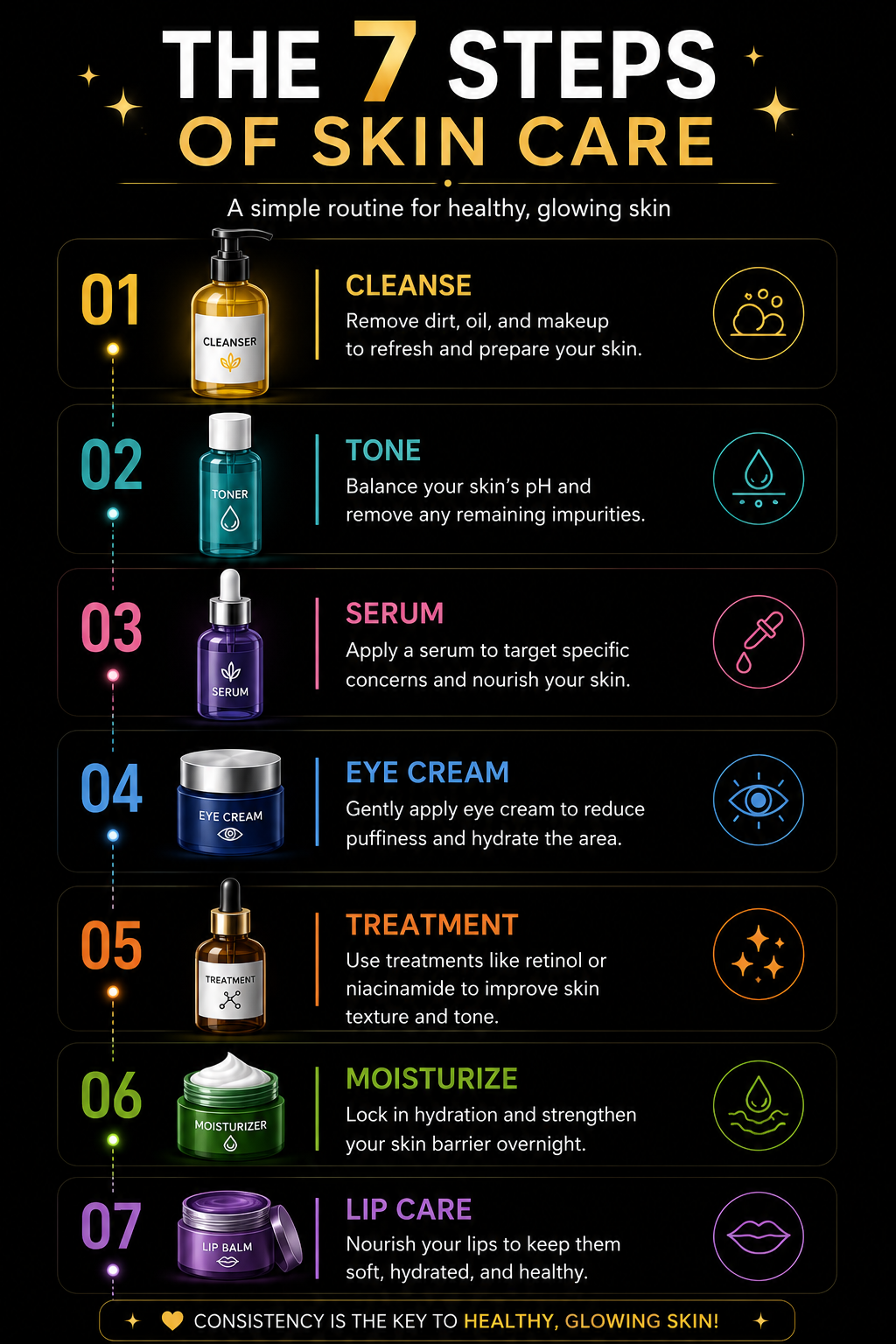
What Are the 7 Steps of Skin Care?
Many people ask, “What are the 7 steps of skin care?” While routines can vary based on individual needs, the following steps provide a solid foundation for maintaining healthy skin.
Step 1: Cleanse Thoroughly
Cleansing removes dirt, oil, sunscreen, and makeup that accumulate throughout the day. Using a gentle cleanser helps prepare the skin for the products that follow.
Step 2: Use a Toner
A toner helps refresh the skin and restore its natural balance after cleansing. It can also improve the absorption of other skin care products.
Step 3: Apply a Serum
Serums contain concentrated ingredients designed to target specific concerns such as dullness, dryness, or uneven texture. Ingredients like hyaluronic acid and vitamin C are popular choices.
Step 4: Use an Eye Cream
The delicate skin around the eyes often requires additional care. Eye creams can help address concerns such as dryness and puffiness.
Step 5: Apply Treatment Products
If you use products containing ingredients such as retinol or niacinamide, nighttime is often the best time to apply them.
Step 6: Moisturize
A moisturizer helps lock in hydration and supports the skin barrier throughout the night.
Step 7: Lip Care
Your lips can become dry while you sleep. Applying a nourishing lip balm helps maintain softness and hydration.
Night Skin Care Routine at Home
Creating a night skin care routine at home doesn’t require dozens of products. A simple and consistent approach is often the most effective.
Start by removing makeup and cleansing your face thoroughly. Follow with a toner if desired, then apply a serum suited to your skin concerns. Finish with a moisturizer that helps retain moisture overnight. This simple routine can support healthier-looking skin and improve comfort and hydration.
Choosing Products Based on Your Skin Type
Different skin types have different needs. Oily skin may benefit from lightweight, non-comedogenic products, while dry skin often requires richer moisturizers. Sensitive skin may respond best to fragrance-free formulations designed to minimize irritation.
Understanding your skin type can help you select products that deliver better results without causing unnecessary discomfort.
How to Improve Skin Overnight Naturally
Many people search for ways to improve skin overnight. While significant changes take time, certain habits can help your skin look and feel better by morning.
Drinking enough water throughout the day supports hydration, while getting adequate sleep allows the skin to complete its natural repair processes. Using a moisturizer before bed can also help reduce dryness and improve softness.
Healthy Habits That Support Glowing Skin
Your lifestyle plays a major role in skin health. Eating a balanced diet rich in fruits, vegetables, and healthy fats provides nutrients that support skin function. Managing stress and avoiding excessive screen time before bed can also contribute to better sleep quality, which benefits the skin.
Small daily habits often have a greater long-term impact than expensive products alone.
Common Nighttime Skin Care Mistakes to Avoid
Even the best products may not deliver results if common mistakes are overlooked. One frequent mistake is sleeping with makeup on, which can clog pores and contribute to breakouts.
Over-exfoliating is another issue that can damage the skin barrier and increase sensitivity. Using too many active ingredients at once may also lead to irritation rather than improvement.
Consistency Is More Important Than Complexity
Many people assume they need a complicated routine to achieve healthy skin. In reality, consistency matters far more than the number of products you use.
A simple routine performed every night is often more effective than an elaborate routine followed only occasionally. Building sustainable habits allows your skin to benefit from regular care and long-term support.
Final Thoughts
A well-planned skin care routine can make a significant difference in your skin’s overall appearance and health. By following a consistent night skin care routine at home, choosing products suited to your needs, and supporting your skin through healthy lifestyle habits, you can wake up with skin that feels refreshed and nourished.
If you’ve ever wondered how to improve skin overnight, remember that healthy skin is built through consistent care rather than quick fixes. With patience, proper hydration, and a thoughtful nighttime routine, achieving smoother, healthier, and more radiant skin becomes an achievable goal.